

Team Building: How Free Roam VR Works for Corporate Events
Category: Parties and Events | Date: Jul 10, 2026 | Read Time: 8 min read
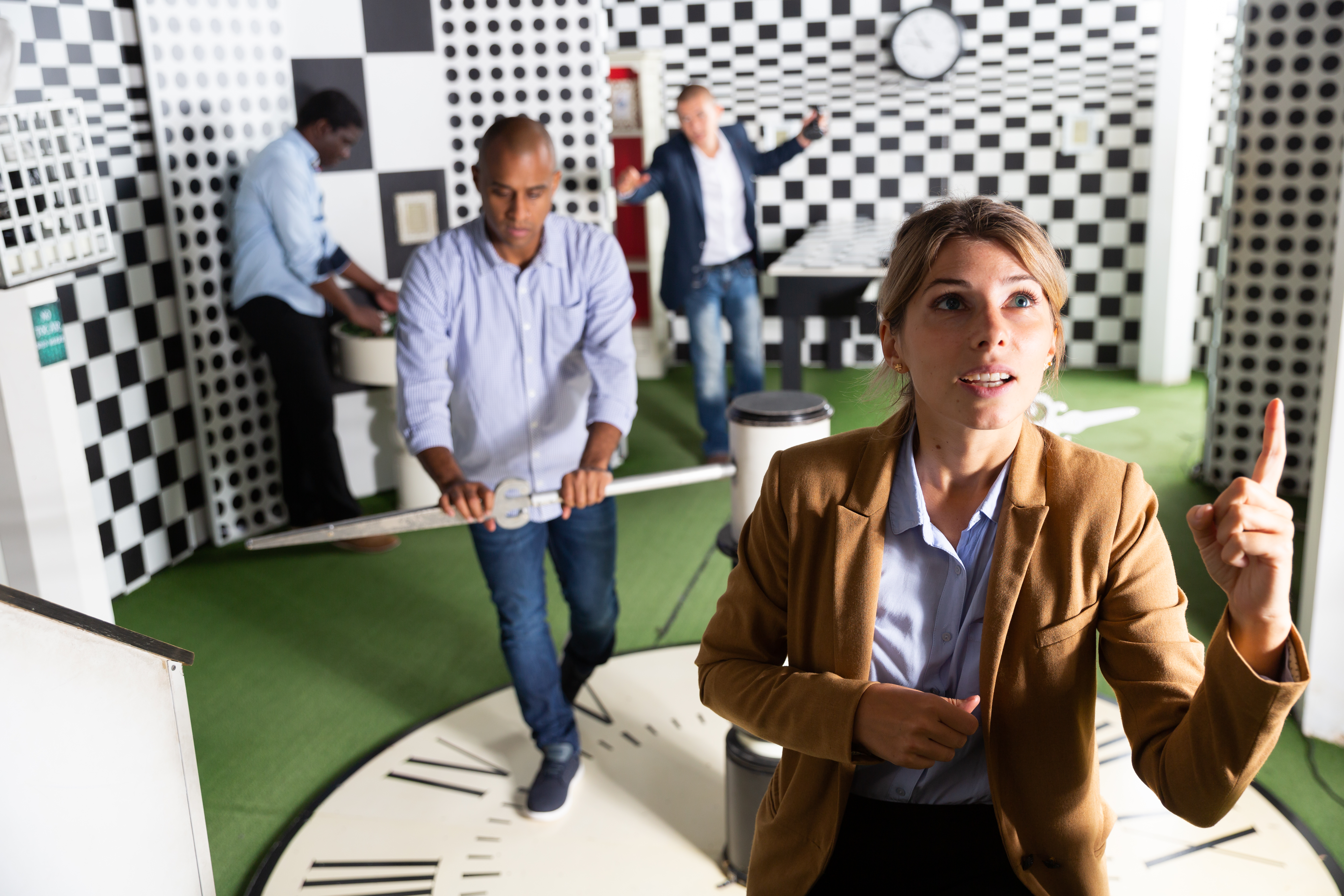
Free-roam VR removes the limitations of home-based headsets. Players are not tethered to wires or confined to a chair. They move through a large, open-plan space in groups. High-end hardware tracks every movement in real-time. This creates a shared experience where players see and hear their colleagues as avatars within the same virtual space. A high-quality facility provides professional staff to manage the setup and safety. This ensures that the only thing your team needs to focus on is the task at hand. The technology handles the immersion while the staff handles the logistics.
Key Takeaways:
- Free-roam VR lets teams move and communicate together in a shared virtual space, revealing natural leadership and communication styles under pressure
- Professional-grade tracking and guided briefings address common concerns about motion discomfort and unfamiliar technology, making sessions accessible to all comfort levels
- A typical 90-minute session pairs well with a pre- or post-event breakout meeting, turning a high-energy activity into a productive team discussion
Why is VR team building superior to traditional activities?
Traditional activities often struggle to hold attention because they feel disconnected from real-world work pressures. VR experiences simulate high-stakes environments that require immediate, tactical communication. Players must coordinate movements and divide responsibilities to succeed in the virtual world. This mirrors the dynamics of successful project management in an office. When teams solve a complex puzzle under pressure, they learn to trust each other’s inputs. This builds a shared sense of accomplishment that lasts long after the session concludes. It is a practical way to foster leadership and cooperation without the friction of a formal lecture.
How does free-roam technology handle motion comfort?
Many people worry that VR causes physical discomfort. Professional-grade, free-roam systems address this through precise motion tracking and high-fidelity displays. When what your eyes see perfectly aligns with your physical movement, the brain remains stable. This eliminates the disconnect that often causes nausea in lower-end systems. Operators also ensure that players have plenty of space to move without risk of collision. If a player wears glasses, professional headsets are designed to accommodate them comfortably. A well-managed facility offers a pre-session briefing to ensure everyone feels confident before the experience begins.
What business outcomes should you expect from a VR session?
The primary benefit of a VR session is the immediate observation of team communication styles. In the heat of an experience, natural leaders emerge and quiet team members often find their voice. You will see how your team processes instructions under pressure. You will also notice how they handle shared failures or collective wins. This provides HR and management with a unique, low-stakes environment to assess group dynamics. Because the activity is inherently social, it breaks down departmental silos. Everyone starts on an equal footing, which encourages interaction between people who might not usually collaborate during the standard work week.
How do you plan a successful VR corporate event?
The best way to start is by defining your goals for the day. Are you looking to break the ice for a new team? Are you trying to improve communication during a high-stress project? Choose an experience that matches these goals. For larger groups, look for a facility that offers rotation schedules or group bookings to keep engagement high. Verify the venue capacity and check if they provide space for post-event debriefs or catering. A professional facility will coordinate with you to ensure the timing suits your agenda. This allows you to integrate the activity into a wider itinerary without unnecessary stress or downtime.
How do you manage concerns about new technology?
Best for: Teams with diverse levels of technical confidence.
Features: Guided briefings, low-latency tracking, and intuitive controls.
Example Scenario: A team member hesitant about technology discovers how easy the controls are during the first two minutes and leads the charge to complete the objective.
It is common for some players to feel nervous about trying new tech. Address this by emphasising that the experience is designed for everyone, not just for regular players. Focus on the collaborative nature of the tasks rather than the hardware. Use the pre-session briefing to explain that help is always available from the floor staff. Remind the team that the goal is to have fun and work together. When the focus shifts to the social connection, most anxieties disappear.
How does professional VR support team morale?
Morale increases when employees feel they have shared a unique, positive memory together. A boring meeting leaves little impression. A shared, intense virtual experience creates stories that staff will talk about for weeks. This strengthens the bond between colleagues and builds a more resilient workplace culture. The novelty of the experience acts as a reward for hard work. It signals that the company values innovation and employee engagement. By stepping away from the desk and into a new world, the team returns to their roles with a refreshed perspective and a stronger sense of shared identity.
Frequently Asked Questions
Do players need special skills to succeed?
No. Every experience is designed for intuitive movement. Professional staff guide all players through the basics before the session starts.
Can teams with different fitness levels participate?
Yes. The experience is about strategy and communication, not physical stamina. Players move at their own pace within the designated area.
How long does a typical corporate VR event last?
Expect to spend about 90 minutes on-site. This includes briefings, equipment setup, the core experience, and a post-briefing wind-down period.
Can we host a meeting before or after the session?
Most professional venues provide breakout areas. It is the perfect way to turn a high-energy activity into a productive planning session.
What happens if someone feels overwhelmed?
Staff monitor every session. They can pause the experience at any time if a player needs to step out or requires extra assistance.